How to choose the right tool for drilling into metal
Choosing a tool for drilling into metal does not start with the drill bit name, but with how you will drill, what you will drill with and under what conditions. These three things determine which metal drill bits and other tools are even suitable for you.
Before you start selecting, clarify:
- which machine you will use (cordless driver, hand drill, bench drill press or pillar drill press)
- how large a hole you need and to what depth
- whether you will drill by hand or have the option of rigid guidance in a workshop
Only based on these points does it make sense to choose a specific tool group.
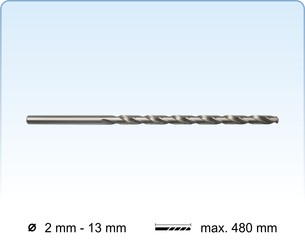
If you only have a cordless driver or a hand drill available, in most cases you will end up with classic twist drill bits for metal or bimetal hole saws. These tools can be used for drilling by hand, do not require special clamping and handle common jobs at home, during installations or repairs.
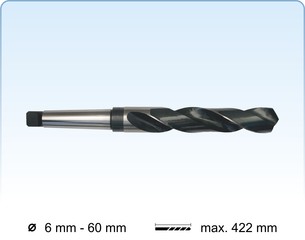
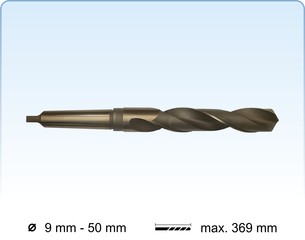
If you work in a workshop and have a bench drill press or pillar drill press available, you can also choose taper shank drill bits (Morse taper). They allow stable work, drilling larger diameters as well as deeper holes than is normally possible when drilling by hand.
Once you are clear on what equipment you use and what hole you need, continue to the overview of individual tool groups in the section How does the range branch further?, where you will find specific options for selecting drill bits and tools for drilling into metal by use.
Where and how drilling into metal is used
Drilling into metal is used in a wide range of situations and environments. Where and how you work has a direct impact on the drill bit choice and the drilling method.
At home and in a hobby workshop
At home and for hobby use, drilling is most often done with a hand drill or cordless drill. Typical jobs involve small to medium diameters – installation holes, repairs, minor modifications of metal parts, or drilling into profiles and sheet metal.
In these cases, most users can manage with classic twist drill bits for metal and, for larger diameters, with bimetal hole saws.
In a workshop and in production
In a workshop environment where a bench drill press or pillar drill press is available, emphasis is placed on accuracy, hole perpendicularity and repeatability. Drilling is done in solid material and thicker profiles, often with larger diameters and to greater depths.
This is where taper shank drill bits (Morse taper) are used as well. They are not designed for hand drilling, but allow stable and accurate drilling into metal.
During installations and field work
During installations and work outside the workshop, drilling is often done in limited space, in various positions and without the possibility of rigid clamping. Cordless tools are typical, with an emphasis on speed and practicality.
Most commonly used are twist drill bits, step and cone drill bits or hole saws, which allow you to adapt the hole diameter to the specific situation on site.
Repairs and specialised work
A specific area is repairs and bodywork, where drilling is done in very thin material or spot welds are drilled out. Here, drill bits designed specifically for this purpose are used to separate individual layers of material without damaging them.
How to work when drilling into metal
The way you work when drilling into metal has a major impact on the result and on how easily the drilling will go. A drill bit behaves differently when working by hand and when drilling on a bench or pillar drill press.
If you drill with a hand drill or cordless drill, try to drill as perpendicular to the material as possible. With metal, it is common to pilot drill – start with a smaller diameter and gradually move to a larger one. Drilling a large hole in one step with a single drill bit is difficult by hand and often leads to the tool grabbing.
When working on a bench or pillar drill press, both the tool and the material are rigidly guided. Drilling is more accurate, more stable and always more reliable in metal than drilling by hand. This method allows drilling larger diameters and deeper holes.
Drilling speed also plays an important role. For drilling into metal, it generally applies that lower RPM is safer, especially with larger diameters and harder materials.
When working, it is recommended to use cutting oils and metal drilling fluids, which reduce heat, improve cutting and extend drill bit life.
What to watch out for
- do not force the drill bit – metal should be cut, not crushed,
- for larger diameters, pilot drill,
- when drilling by hand, expect worse control of perpendicularity,
- excessively high RPM leads to overheating and rapid drill bit wear.
Work safety
When drilling into metal, wear safety glasses, secure the drilled material firmly and keep the workplace clean. Loose clothing or long hair can pose a snagging risk.
How does the range branch further?
The range of drill bits and tools for drilling into metal is divided by method of use, machine type and hole characteristics. By clicking on individual groups, you will get directly to solutions that match your way of working.
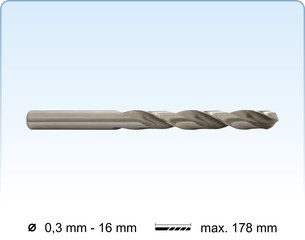
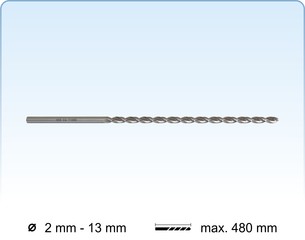
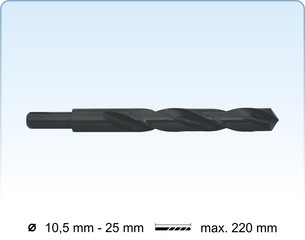
- Drill bits with a cylindrical shank
The most common choice for hand drills and cordless drills. Choose the diameter, length and the drill bit material according to the metal being drilled.
- Drill Bits with Morse Taper Shank
For bench and pillar drill presses. They allow stable drilling of larger diameters. Choose diameter and material (HSS or cobalt).
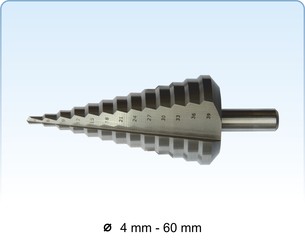
- Stepped drills and tube and sheet drills
Ideal for sheet metal and thin-walled materials where hole diameter often changes.
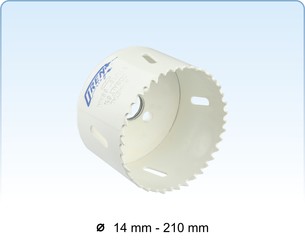
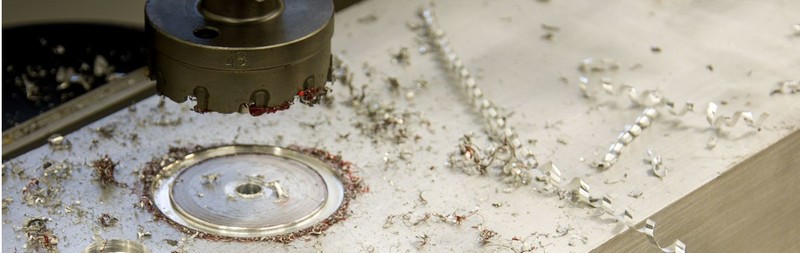
- Bi-Metall hole saws
For drilling larger diameters into metal. Two types are available depending on the material and various clamping methods.
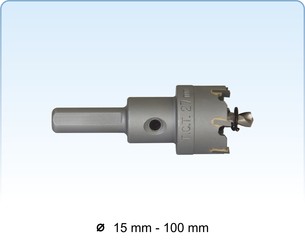
- Tungsten carbide hole saws
Carbide-tipped (TCT / HM), designed for hard materials and very large diameters. Suitable for workshops and demanding use.
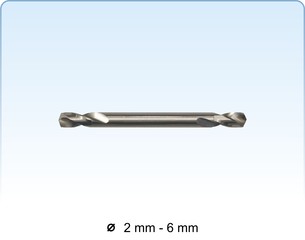
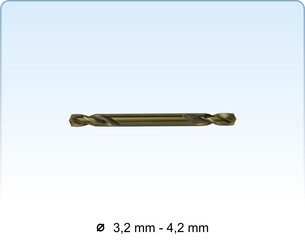
- Double-ended drill bits
Used in bodywork and by sheet metal workers, suitable for working with sheet metal in limited space.
- Hollow section drills
Designed for thin-walled profiles, helping to reduce material deformation.
- Subland drills
Allow drilling a hole and countersinking the screw head in one step.
- Center drills
Used for precise hole starting and to prevent the drill bit from slipping.
- Spot weld drill bits
For drilling out spot welds during repairs and bodywork.
- Milling drill bits
Allow starting a hole and then milling an opening of any shape, suitable for hobby and workshop use.
- Metal drill bit sets
A clear solution if you need multiple diameters together.
Hide