How to choose the right rotary burr
Choosing a rotary burr is best done in two clear steps. First you choose the burr material according to the workpiece material, and only then do you select the specific burr shape according to the type of work. This approach reflects real workshop use as well as the structure of the range.
1️⃣ Choosing the burr material according to the workpiece material
The first step is always the decision based on the material you will be machining. By choosing the burr material, you define the basic properties of the tool – its hardness, how it behaves under load and what long-term stress it can handle.
If you work with aluminium, aluminium alloys, non-ferrous metals or plastics, you typically choose HSS burrs. They have tooth geometry adapted to softer materials and smoother cutting action. A typical example is finishing aluminium edges, adjusting lightweight parts or cleaning up plastic components.
For steel, stainless steel or cast iron, carbide burrs are intended. The higher tool hardness enables stable material removal even in tougher metals, for example when finishing a weld on a steel part or deburring edges after cutting.
For longer-term or intensive work, especially in steel or stainless steel, carbide burrs with a TiAlN coating are chosen. The coating reduces tool wear under higher thermal load and extends tool life, which is most noticeable during repeated or demanding operations.
Tooth geometry (“cut pattern”) is defined by the tool design within each material group. The customer does not choose it separately – the correct cutting character already follows from the choice of burr material.
2️⃣ Choosing the burr shape according to the type of work
After selecting the burr material, the next decision is the shape of the working part. This step is no longer driven by the workpiece material, but by the specific operation you want to perform – where and how you will remove material.
In other words: the workpiece material determines what the burr should be made of, while the burr shape is chosen according to the task (weld finishing, edge breaking, shaping a transition, etc.).
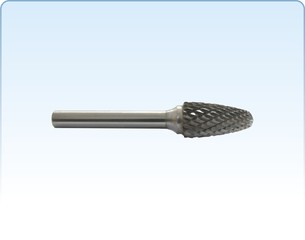
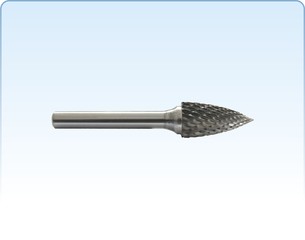
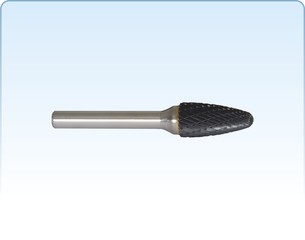
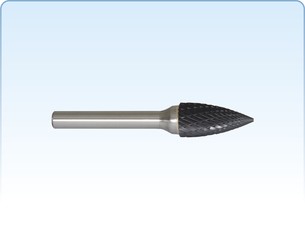
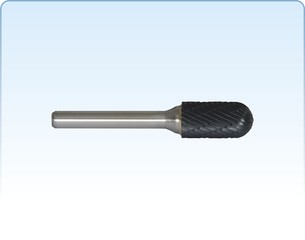
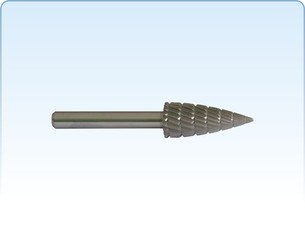
If you are finishing a weld, fillet or transition between two surfaces, a radius burr is typically chosen – pointed or rounded depending on the required result. This shape allows smooth guidance without sharp breaks.
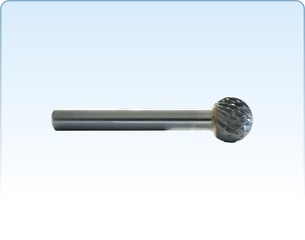
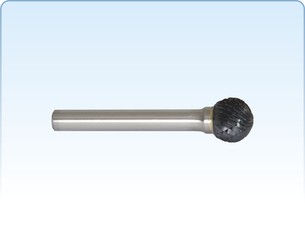
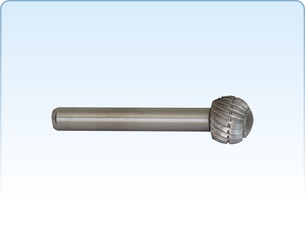
For shaping, working in cavities or creating smooth transitions, ball burrs are used, allowing uniform material removal in all directions.
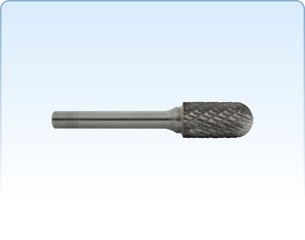
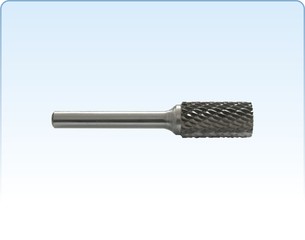
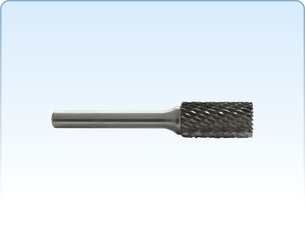
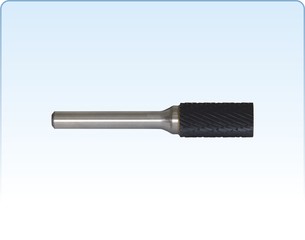
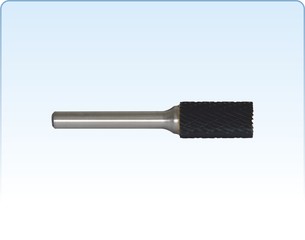
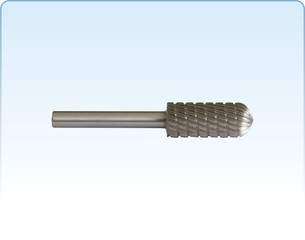
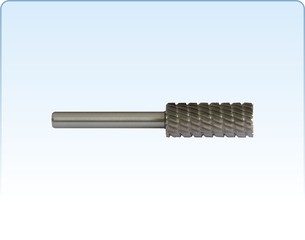
For deburring and finishing straight edges, cylindrical burrs or cylindrical burrs with a radius are suitable, for example after cutting or drilling.
If the goal is faster material removal on edges or surfaces, cylindrical burrs with serrations are used, as their design enables more efficient material removal.
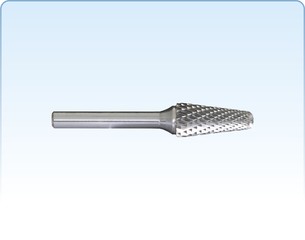
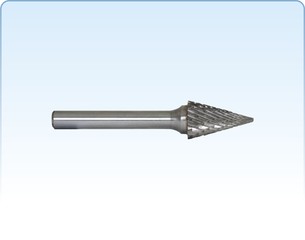
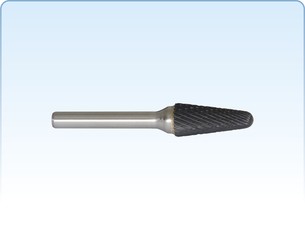
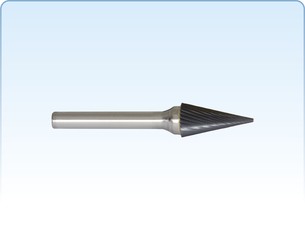
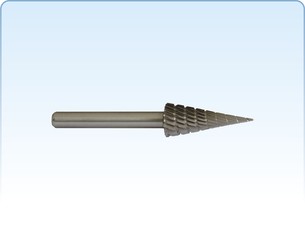
For chamfering edges and creating bevels, conical burrs are used, again in pointed or rounded versions depending on the job.
The final burr shape therefore follows the specific operation you need – for example weld finishing, edge chamfering or shaping a transition.
Where and how rotary burrs are used in practice
You will use rotary burrs wherever you need to locally adjust the shape, edge or surface of a material with higher precision than conventional grinding allows. You do not remove material over a whole area, but in a targeted way – only where it is needed.
Metal fabrication and general metalwork
In metal fabrication and general metalwork, rotary burrs are used mainly for:
- deburring edges after laser, saw or plasma cutting,
- breaking sharp edges before assembly or another operation,
- cleaning up places a grinding disc cannot reach or would be too aggressive.
Practical example:
After cutting a steel profile, sharp edges and small burrs remain. Using a cylindrical or conical burr, you can break and finish the edge without unnecessarily removing material around it.
Welding and weld finishing
When welding, rotary burrs are used for:
- levelling excess material after welding,
- finishing the transition between the weld and the base material,
- surface preparation before painting or another surface treatment.
Practical example:
After welding a structure, you only need to clean up the weld and blend it with the surrounding material, not grind it completely flat. With a radius or ball burr, you can adjust the transition between the weld and the base material exactly where needed and keep a smooth shape.
Workshop work and repairs
Rotary burrs are also useful for common workshop work and repairs when you need to fine-tune a detail or remove small imperfections without affecting a larger area.
Practical example:
When repairing a part or device, you may need to remove burrs, break a sharp edge or slightly adjust a shape so everything seats correctly. With a rotary burr, you can make a precise correction only where the problem is, without disturbing surrounding functional surfaces.
Summary of use
In all of the cases above, a rotary burr:
- removes material point-by-point or along a line, not across a whole surface,
- enables a controlled and precise intervention,
- gives you more feel during work than a grinding disc.
How to work with rotary burrs
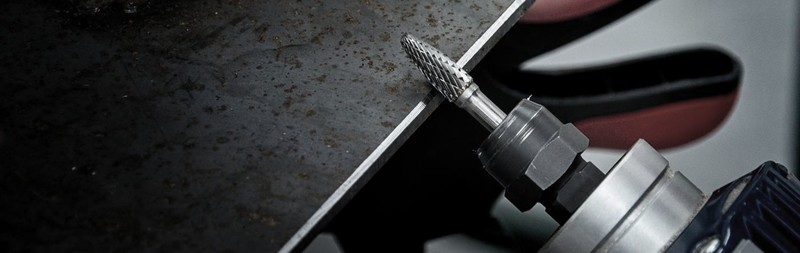
Rotary burrs are tools designed for high-speed operation and are used exclusively in rotary machines that support this mode – typically die grinders, micromotors or rotary tools. Their use is based on controlled guidance and gradual material removal, not on force or pressure.
Basic working principle
When working with a rotary burr you:
- guide the tool smoothly and without unnecessary pressure,
- let the burr work with its tooth geometry,
- remove material gradually, in smaller steps.
The goal is not the fastest possible material removal, but a precise intervention in a specific spot – on an edge, in a weld or when shaping a detail.
RPM and suitable machines
Rotary burrs are designed for high RPM, typically in the range of 10,000 to 30,000 rpm, depending on burr type, diameter and the workpiece material.
This means:
- they are suitable for die grinders, micromotors and rotary tools that allow high RPM,
- they are not suitable for use in a cordless driver or a standard drill, which operate at much lower RPM and do not provide the required running stability.
Using a rotary burr at low RPM results in poor cutting, vibration and may damage both the tool and the workpiece.
Tool guidance and control of material removal
A rotary burr removes material point-by-point or along a line, giving you very good control over the working area. During work you:
continuously monitor the result,
guide the burr so it follows the shape of the edge, weld or transition,
finish only the area where it is truly necessary.
This makes it easy to avoid removing material from functional or visible surfaces.
Pressure, stability and tool behaviour
Correct work with a rotary burr is a combination of:
sufficient RPM,
minimal pressure,
stable hand guidance.
Excessive pressure causes rough running, vibration and faster burr wear. Smooth guidance, on the other hand, leads to a cleaner result and longer tool life.
Safety and practical recommendations
When working with rotary burrs you:
- always use eye protection (flying chips),
- ensure the burr is clamped correctly in the tool,
- check the tool condition before starting work.
Rotary burrs are not intended for surface grinding of large areas or rough forceful work. Their main advantage is precision, feel and control over material removal.
Typical mistakes
The most common mistakes include:
- using a rotary burr in a cordless driver or drill,
- too much pressure instead of smooth guidance,
- trying to replace a grinding disc with a burr,
- incorrect clamping or working with a damaged burr.
How does the range branch further?
The range of rotary burrs is structured so you can quickly orient yourself by usage. First you choose the burr material, which determines basic applicability, and then the specific working-end shape according to the type of work.
1️⃣ Basic division by burr material
The first step when navigating the range is always division by burr material. This determines tool life, suitable load and typical application.
- HSS burrs
Intended mainly for softer materials such as aluminium, aluminium alloys, non-ferrous metals and plastics. Suitable for finer work, shorter duty cycles and situations where high material removal is not required.
- Tungsten Carbide Rotary Burrs
The basic choice for steel, stainless steel and cast iron. They offer higher hardness, stable cutting and significantly higher material removal. Used in standard and more demanding metalwork and maintenance.
- Tungsten Carbide Rotary Burrs with TiAlN Coating
Intended for higher load, longer duty cycles and intensive use. The coating reduces wear and thermal load, resulting in longer life and more stable performance.
- Rotary burr sets
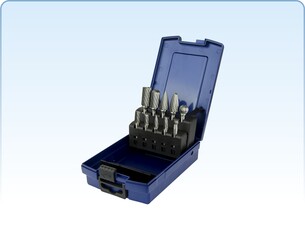
A combination of multiple shapes and sizes in one package, allowing you to have a universal kit for different types of work. Sets are a practical choice for workshops, maintenance and service where different operations are often alternated and you want the right burr shape always at hand.
2️⃣ Subsequent selection by working-end shape
After choosing the burr material, you then select the specific working-end shape according to the work you will be doing.
Hide