How to choose the right DIN 338 metal drill bit
Within the DIN 338 standard length range, drill bits differ in material, manufacturing method, and point geometry. The correct choice depends mainly on the hardness of the material being drilled, the required hole accuracy, and the intensity of use.
Material you will be drilling into
For standard structural steels, cast iron, and non-ferrous metals, high-speed steel (HSS) drill bits are suitable.
For stainless steel and stronger materials, cobalt versions (HSS-Co) are recommended, as they better withstand the heat generated during drilling.
For very hard materials or demanding applications, carbide-tipped drill bits are also available. They offer higher wear resistance and maintain cutting performance even under higher loads.
Accuracy and drilling quality
Basic rolled versions are suitable for standard installation work.
For more precise holes, smoother operation, and longer service life, ground versions or special point geometries are recommended.
Hole diameter and depth
DIN 338 is the medium (standard) length series, suitable for most common applications.
If you need to drill deeper holes, choose extended DIN 340 drill bits or extra-long DIN 1869 drill bits.
For work in confined spaces or for short, precise drilling, you can use short double-ended drill bits, which have a more compact length and higher rigidity.
A detailed overview of the available versions in this subcategory can be found below in the section “How does the selection continue?”.
Where and how DIN 338 metal drill bits are used
DIN 338 drill bits are used for general and precise metal drilling, especially in:
- manufacturing and modifying metal parts in workshops,
- drilling mounting holes in steel profiles and sheets,
- installing structures, brackets, and frames,
- service and maintenance work.
They are suitable for hand drills, cordless drills, and bench drills with a standard chuck. For more precise work, a drill press is recommended to ensure stable tool guidance.
Metal drilling must always be performed without hammer action.
⚠️ Important notice:
Pneumatic or electric hammers with SDS-plus shanks are not suitable for metal drilling, even when using an adapter with a standard chuck. Their design does not allow the smooth rotational movement required for precise metal drilling.
How to work with DIN 338 metal drill bits
When drilling metal, the correct combination of tool, machine, and working conditions is essential. Even a high-quality drill bit can quickly lose sharpness if used improperly.
Basic drilling rules
- Always drill without hammer action.
- Adjust speed according to drill diameter and material hardness.
- For larger diameters, pre-drill with a smaller bit.
- Do not overheat the tool by applying excessive pressure.
Lubrication and cooling
When drilling steel and especially stainless steel, it is recommended to use cutting oil or cutting paste.
Lubrication reduces friction, limits heat generation, and significantly extends drill bit life.
Tool stability and guidance
The workpiece must always be firmly secured.
For more precise work, use a drill press to ensure perpendicular guidance.
Work safety
- Wear safety glasses.
- Do not wear loose clothing, sleeves, or chains.
- Do not remove chips by hand or while the machine is running.
How does the selection continue?
Within the DIN 338 drill bit range, the offer is further divided by construction, material, and intended use.
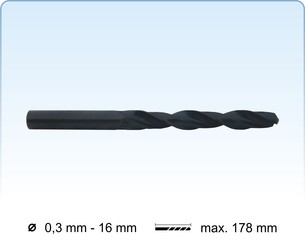
Rolled HSS drill bits
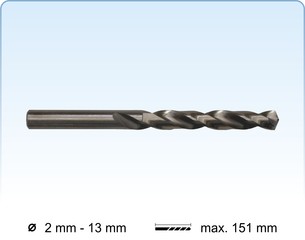
Suitable for general drilling into structural steel, cast iron, and non-ferrous metals, especially during installations and field work. They are more flexible and, when used correctly, less prone to breakage than ground drill bits.
They are not suitable for stainless, alloyed, or high-strength steels – in these materials they dull very quickly or may not perform effectively.
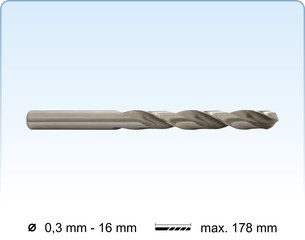
Fully ground HSS drill bits
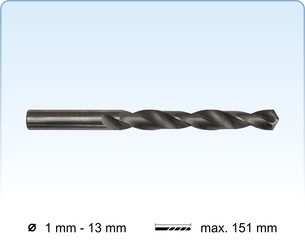
The standard for professional drilling in workshops and manufacturing. They offer higher precision, smoother operation, and longer service life compared to rolled versions.
Suitable wherever accurate holes and consistent results are required during repeated drilling.
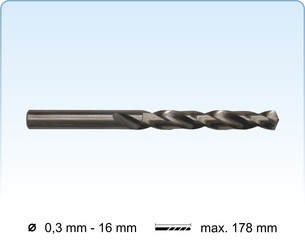
Fully ground cobalt drill bits (HSS-Co 5% and HSS-Co 8%)
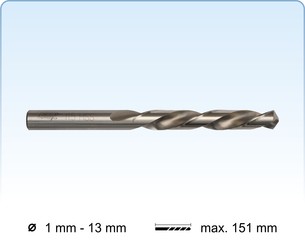
Designed for drilling stainless, alloyed, and high-strength steels where standard HSS bits usually fail or dull very quickly.
They are harder and more heat-resistant but also more brittle – therefore not suitable for inaccurate guidance, side loading, or where their higher hardness is not truly required.
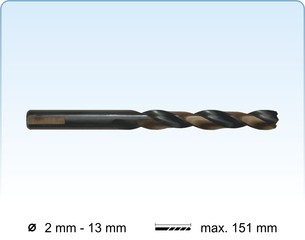
TURBO type drill bits
Special point geometry for faster centering and smoother drilling progress.
Solid carbide drill bits
For very hard materials and demanding applications where standard HSS or HSS-Co versions are insufficient.
Left-hand DIN 338 drill bits
Left-hand versions suitable, for example, for removing broken screws.
DIN 338 drill bit sets
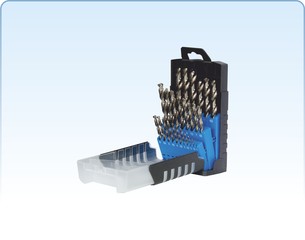
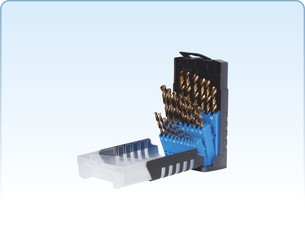
A practical solution for workshops and installations – covering common diameters in one package.
DIN 338 drill bits with reduced shank
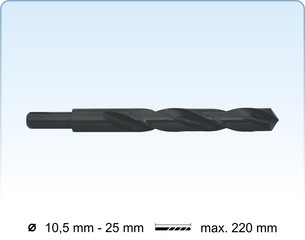
Drill bits with reduced shank are available in diameters from 10.5 to 25 mm, while the shank remains suitable for standard 13 mm chucks of hand drills and cordless tools.
They are a practical solution when you need a larger hole diameter but do not have access to a machine with a larger chuck capacity.
Hide Description