How to choose the right subland drill bitk
When choosing a subland drill bit, it is best to start with the type of screw you will be using and the required final shape of the hole. The different versions in this category mainly vary according to the screw head type and the required countersink shape.
Focus mainly on:
- the type of screw head the drill bit is intended for
- the countersink angle required for proper screw seating
- standard or extended version according to drilling depth and accessibility
- the material you will be drilling into
- the specific product description and recommended application
Different versions are used for countersunk head screws and cylindrical head screws. If you need the screw head to sit flush with the material surface, choosing the correct drill bit design and countersink shape is essential.
The tool length also plays an important role. Extended versions are suitable where better reach, deeper guidance, or easier access in confined spaces is required. Standard versions are more suitable for regular drilling applications where additional length is unnecessary.
These drill bits are suitable for:
- alloyed and non-alloyed steels
- iron and cast iron
- non-ferrous metals
- stainless steel materials such as V2A and V4A
- selected non-metallic materials such as wood, chipboard, plywood, or plastic
Where and how subland drill bits are used
subland drill bits are used wherever it is necessary to prepare a screw hole and simultaneously create a recess for proper screw head seating. They are suitable for precision assembly and manufacturing work where both clean results and time savings are important.
Typical applications include:
- mechanical engineering production
- automotive industry applications
- assembly and workshop work
- woodworking and furniture manufacturing
- general craft and trade work
Their main advantage is combining two operations into one. There is no need to first drill the hole and then countersink separately, which speeds up the process and helps maintain consistent results during repeated drilling operations.
They are especially practical when you need to:
- accurately seat the screw head
- reduce drilling time for multiple identical holes
- minimize tool changes during work
- achieve cleaner and more repeatable results
Depending on the specific version, they can be used not only in metal materials but also in selected common workshop materials. However, it is always recommended to follow the product description of the specific version, as suitability may vary between product groups.
How to work with subland drill bits
These drill bits allow you to drill a hole and simultaneously create a countersink for the screw head in a single operation. This simplifies work especially where precise, smooth, and efficient drilling is required.
Work is also made easier by the centering tip, which helps guide the tool smoothly into the material. Thanks to this, pre-drilling or center punching is often unnecessary, simplifying the process and speeding up the work.
When working with these drill bits, pay particular attention to:
- correct drilling speed according to material hardness
- smooth feed without excessive pressure
- proper lubrication or cooling when drilling into metal
- selecting the correct drill bit according to screw type and desired result
As a general rule, the harder the material, the lower the drilling speed should be. Drilling speed should usually be lower than when using a standard drill bit of the same diameter. When drilling into metal, it is recommended to use cutting paste or cutting oil, which help improve drilling performance and reduce unnecessary tool stress.
Depending on the specific version, the drill bit can be used in:
- hand drills
- drill presses
For clean results, allow the drill bit to work smoothly without unnecessary overload. Stable operation and precise guidance are important so that the final countersink matches the screw type and the screw head seats properly.
How is the product range further divided?
The range of subland drill bits is divided into several specific groups according to design type and intended application. This helps you quickly find the version that matches the screw type and the required countersink shape.
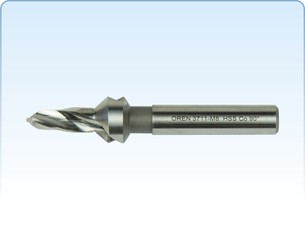
90° subland drill bits, HSS-Co
This group is designed for drilling holes and simultaneously creating countersinks for countersunk head screws. Suitable wherever a clean and precise flush screw head seating is required.
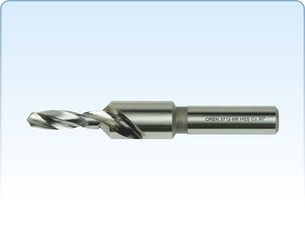
90° subland drill bits, HSS-Co, long
The extended version is suitable for deeper drilling or work in hard-to-reach areas. It follows the same working principle as the standard 90° version but provides greater reach.
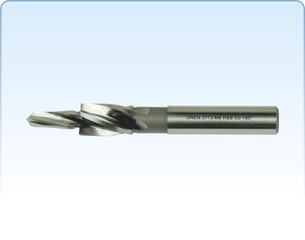
180° subland drill bits, HSS-Co
This version is designed for drilling and simultaneously creating recesses for cylindrical head screws. It is suitable wherever precise seating is required for screw heads with a shape different from countersunk screws.
Hide Description