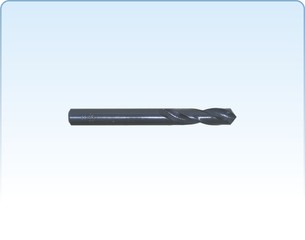
How to choose the right extra-short metal drill bit
The main factors to consider are the workpiece material, the required accuracy and the way in which the drill bit will be used.
Roll-forged HSS drill bits
A basic economical design for general-purpose drilling in structural steels, cast iron and non-ferrous metals. They are suitable when you need a short and stable drill bit for less demanding work.
HSS-G rivet drill bits
Ground drill bits with a split point for handheld drilling in thin sheet metal. The available diameters correspond to commonly used rivet hole sizes. The short design helps to keep the drill bit stable during use, while the split point makes it easier to position the drill bit accurately.
Extra-short HSS-Co5 cobalt drill bits DIN 1897
A more accurate and heat-resistant design for stainless, alloyed and higher-strength steels. The ground construction and short length provide smoother running and good stability, even during more demanding drilling operations.
Sets of extra-short cobalt drill bits
A practical choice for workshops, maintenance and production environments where several common diameters are required. The drill bits are stored in a metal case and are available in sets of 19 or 25 pieces.
Where extra-short and rivet drill bits are used
Extra-short and rivet drill bits are suitable for workshops, production, maintenance and servicing, as well as for assembly and repair work.
Typical applications include:
- drilling shallow holes in metal components,
- working in areas where a longer drill bit would be obstructive,
- accurately starting holes in the workshop or in a production fixture,
- drilling holes in sheet metal, profiles and vehicle body parts,
- preparing holes for blind rivets and other types of rivets,
- assembly, servicing and repair work.
How to use extra-short drill bits
Secure the drill bits in a standard chuck of a handheld drill, cordless drill or drill press. Always drill metal without hammer action and clamp the workpiece securely before starting.
Adjust the rotational speed according to the drill bit diameter and the material being machined. When drilling steel, stainless steel and other higher-strength metals, use cutting oil or a suitable cutting paste. This reduces overheating and extends the service life of the tool.
Drill bits with a split point are easier to start and are less likely to wander across the surface. When using basic roll-forged drill bits for accurate work, it may be advisable to mark the drilling position beforehand with a centre punch.
Limitations of extra-short drill bits
The short design reduces drill bit deflection, improves stability and reduces tool stress during handheld drilling. At the same time, however, it limits the achievable drilling depth.
Extra-short drill bits are therefore not intended for deep-hole drilling. For normal drilling depths, choose standard DIN 338 drill bits. For deeper holes, long-series DIN 340 drill bits are more suitable.
The individual types of extra-short metal drill bits and rivet drill bits can be found further down this page.
Hide