How to choose the right tool for drilling into tiles and ceramics
When drilling into tiles and ceramics, not only accurate guidance matters, but also sufficient tool power and a correctly chosen tool type. A weak machine, an unsuitable hole saw, or a poor combination of both can lead to overheating, surface damage or unnecessarily slow progress.
Tool selection is therefore driven not only by the hole diameter, but mainly by the working method, material hardness and how demanding the drilling will be.
1️⃣ What type of drilling will you be doing
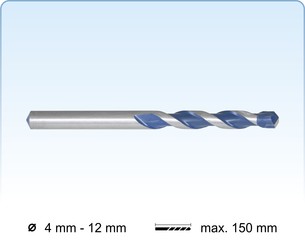
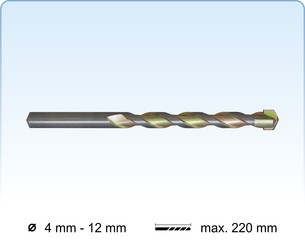
At this stage, it is useful to distinguish whether a universal drill bit will be enough or whether you will need a hole saw. Universal drill bits are mainly suitable for smaller installation holes in standard ceramic wall tiles and less hard floor tiles.
A key decision is choosing between dry drilling and drilling with water cooling. These two groups differ not only in the working method, but also in the design of the hole saw’s diamond layer, which is always optimized for a specific application.
The basic choice comes down to how intensively and how often you will be drilling into tiles or ceramics.
- Dry diamond hole saws
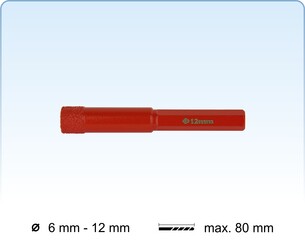
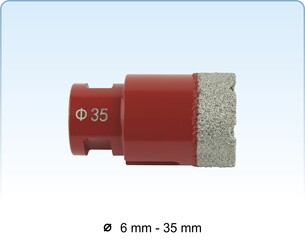
Suitable for standard installation work and fast drilling without cooling. They are used where you need to work efficiently but still maintain control. They are available for angle grinders as well as for drills and cordless drivers.
- Wet diamond hole saws
Chosen for more demanding drilling, harder materials or a higher number of holes. Water cooling reduces tool heating, extends service life and enables smoother cutting, especially in hard porcelain stoneware.
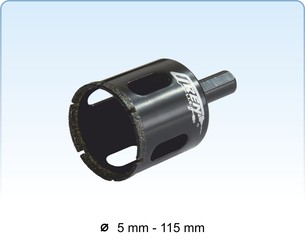
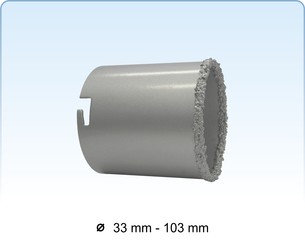
- Tungsten carbid halesaws
An older type of solution that is used rather exceptionally today. In the range, it serves mainly as an additional option, while the main choice is diamond hole saws.
The right choice of hole saw type helps achieve a clean hole, stable progress and reduces the risk of damaging both the glaze and the tool itself.
2️⃣ Which machine and working method to choose
Tools for drilling into tiles and ceramics place demands not only on the drill bit or hole saw itself, but also on the machine and the working method. It is not about brute force, but about a combination of sufficient power, stable RPM and calm tool guidance.
- Cordless drivers and handheld drills
Suitable for small and medium hole diameters if they allow smooth RPM control. Sufficient power is important so the tool does not lose speed and overheat unnecessarily.
- Hammer drills
Can be used only with the hammer action switched off. Hammering on tiles and ceramics leads to cracking or glaze chipping.
- Angle grinders
Used mainly with diamond hole saws designed for this type of mounting, especially for larger diameters and harder floor tiles. They require more experience, steady guidance and careful work.
Regardless of the machine type, drilling must be smooth, without jerky movements and with controlled pressure, to avoid damaging the tile or ceramic surface.
Where and how drilling into tiles and ceramics is used in practice
You deal with drilling into tiles and ceramics when the surface is already finished and any intervention must be done precisely, cleanly and with no room for correction. This is not rough construction work, but installation tasks where a visible result is expected.
Typical situations in practice
- Bathroom and kitchen installations
Whenever you need to mount a shelf, cabinet, mirror, towel rail, shower set or bathroom accessories directly into wall tiles or floor tiles.
- Home plumbing work
When installing or replacing a mixer tap, shower, trap, or creating a pass-through for a drain or pipe, you often work with larger diameters where a clean hole edge is essential.
- Electrical installation and small DIY tasks
Drilling for mounting lights, cable clips, trunking or small electrical components on tiled walls.
In all these situations, the right tool and method help you create a hole without damaging the glaze or the surrounding material.
How to work with tools for drilling into tiles and ceramics
Drilling into tiles and ceramics is based on controlled material removal, not on force or speed. The material is hard but also brittle, and therefore requires a calm process and the correct cutting technique.
The key difference compared to drilling into concrete or masonry is that you do not use hammer action and you do not push the tool with force. The goal is a clean hole without damaging the glaze and the surrounding material.
Basic working rules
- Always drill without hammer action; hammering causes cracking or glaze chipping.
- Start carefully when entering the material – with hole saws (especially on an angle grinder) it is common to start at a slight angle and, after creating a guiding groove, gradually straighten the hole saw to a perpendicular position.
- If you drill freehand without a guide, keep the tool as stable as possible and, after the entry is established, continue perpendicular to the surface.
- Maintain smooth and even pressure; do not force the tool and let it cut with its own action.
- Monitor tool temperature, especially at larger diameters – overheating increases the risk of damaging both the tile and the hole saw.
How to work with diamond hole saws (dry vs. wet drilling)
Diamond hole saws allow very precise drilling into tiles and ceramics, but the result depends on whether you drill dry or with water cooling. Each method has its own specifics and preparation requirements.
Dry drilling with diamond hole saws
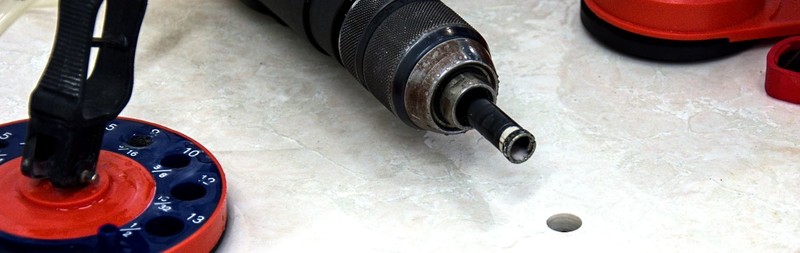
Hole saws designed for dry drilling work without a water supply and are suitable where fast progress and minimal site preparation are required. In terms of the cutting section, these hole saws are structurally the same; the difference is the mounting type and the machine.
- M14-thread hole saws are intended for angle grinders, which operate at significantly higher RPM. High RPM enables smooth material removal but requires steady guidance and the correct entry technique.
- Hex-shank hole saws are intended for cordless drivers and drills with the hammer function switched off. They run at lower RPM but offer better control when entering the glaze.
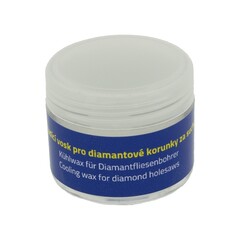
With smaller diameters, in our case the hole saws are already filled with cooling wax, which reduces friction and helps regulate temperature during drilling.
- cooling wax reduces hole saw overheating,
- for longer drilling, it is recommended to work in shorter intervals,
- wax can also be purchased separately, especially for larger diameters or more intensive use.
The difference between using an angle grinder and a drill is therefore mainly in the drilling speed and degree of control, not in the cutting quality of the hole saw itself.
Wet drilling with diamond hole saws
For more demanding work and harder materials, diamond hole saws with water cooling are used. This method is calmer and enables better control, especially on hard and thicker floor tiles.
- water reduces tool heating and removes dust from the cutting area,
- drilling is smoother and gentler on the material,
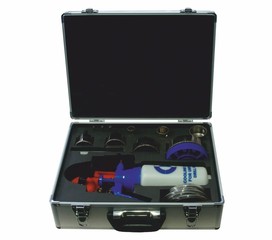
- the work requires appropriate accessories, typically:
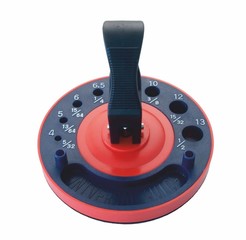
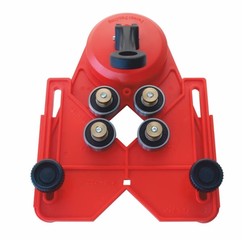
- guide templates for accurate hole saw positioning,
- templates with coolant feed for smaller and larger diameters,
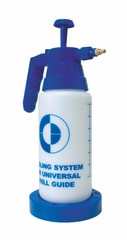
- a water container or water feed system.
Using water cooling extends hole saw life and reduces the risk of damaging the tile surface.
Risks and limitations when drilling into tiles and ceramics
Drilling into tiles and ceramics is one of those jobs where mistakes are difficult to fix or completely irreversible. The material is hard but also brittle and visible, which places higher demands on the correct method and tool choice.
What to watch out for
- Tile or ceramic cracking
The most common risk occurs when hammer action is used.
- Glaze chipping at the hole edge
Typically caused by incorrect entry technique, unstable guidance or overly aggressive pressure.
- Tool overheating
During dry drilling without breaks or without cooling wax, the hole saw can wear quickly and cutting quality can deteriorate.
- Uncontrolled tool skidding on the surface
A risk especially on smooth glaze without the correct entry technique or a guide template.
Tool limitations
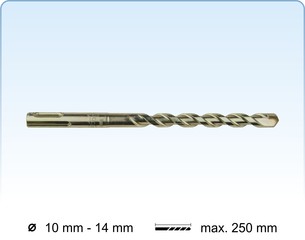
- Hole saws and drill bits designed for tiles and ceramics are not suitable for drilling into concrete or masonry – after passing through the tile, you must switch to the appropriate tool.
- Larger diameters place higher demands on machine power and stable guidance.
- With wet drilling, you need to allow for site preparation and protecting surrounding surfaces from water.
Respecting these limitations significantly reduces the risk of damaging the finished surface and helps achieve a clean and precise result.
Working with wet diamond hole saws
For more demanding work and harder materials, wet diamond hole saws are used, where cooling is provided by water.
- water reduces tool heating and also removes the generated dust,
- drilling is calmer and smoother, especially on hard floor tiles,
- it is necessary to use suitable accessories – water feed, a guide jig or adapters depending on the type of hole saw and the machine.
Wet drilling is more technically demanding in terms of preparation, but it allows longer tool life and greater control when drilling larger diameters.
The right procedure and respecting the specifics of each hole saw type significantly increase the chance of a clean result while protecting both the tool and the tile or ceramic surface.
How does the range branch further?
The range of tools for drilling into tiles and ceramics is structured to guide you step by step to the right tool depending on the drilling method and the machine used. You choose the specific hole diameter only with the individual products.
Hide Description