How to choose the right formwork auger drill bit
When choosing, the most important factors are the machine type, the drill bit length, and the nature of the material.
By clamping type
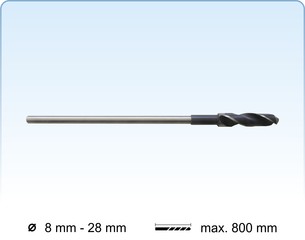
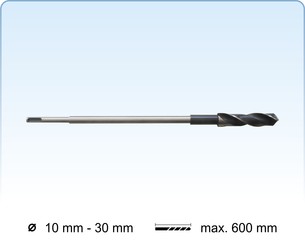
Formwork drill bits are divided by the type of shank/clamping:
With round shank – designed for standard drills with a chuck.
With SDS-plus shank – designed for SDS-plus rotary hammers (when drilling wood always without hammer action).
The clamping type must match your machine.
By drill bit length
Formwork drill bits are made in various lengths, often significantly longer than standard twist drill bits. Choose a length that allows you to safely pass through the entire material without having to drill from both sides.
By type of work
They are suitable for drilling through formwork panels, plywood, beams, OSB boards, or insulation layers. They are not intended for precise cabinetmaking work or for drilling flat-bottomed holes.
The difference between a formwork drill bit and an auger bit
At first glance they may look similar, but their use differs.
An auger bit is typical for its self-feeding screw tip, which actively pulls the bit into the material. It is suitable for deep drilling in solid beams and structural elements where fast penetration is required.
A formwork auger drill bit, in contrast, is designed for straighter guidance and is intended mainly for long, straight through holes through multiple layers of material (for example formwork panels, plywood, insulation, or a combination of materials). It typically does not have an aggressive self-feeding screw, which allows a calmer and more controlled process during long drilling.
If you drill a single thick beam, an auger bit is often the better choice.
If you need an accurate through hole through multiple construction layers, a formwork drill bit is the better choice.
Where formwork auger drill bits are used in practice
Formwork drill bits are used mainly in construction work.
Typical uses:
- drilling through holes for formwork ties and fasteners,
- drilling through multiple layers of wood-based material,
- assembly work where a long, straight through hole is needed,
- installing anchoring elements,
- work on timber construction sites or during concreting.
Thanks to their length and design, they allow you to pass through the material safely and accurately without frequent interruptions.
How to work with formwork auger drill bits
Use formwork auger drill bits without hammer action.
Choose a sufficiently powerful machine
Longer drill bits place higher demands on machine stability and torque.
Hold the machine firmly and stand stable
When drilling deep holes, the drill bit may suddenly slow down or deflect.
Proceed straight and without excessive pressure
Do not force the tool. Let the drill bit work with its cutting geometry.
Remove chips regularly
For deeper holes, pull the bit out periodically so the hole does not clog.
Secure the material
The material must be firmly fixed so it cannot move during drilling.
Limitations and what to watch out for
Formwork drill bits are not intended for drilling in concrete or metal.
They are not suitable for fine, precise work that requires a very clean entry edge.
When used in an SDS-plus machine, hammer action must always be switched off.
How the offer is further divided
Hide Description